Carlisle, you showed up and said yes. Now we get to work.
Unprecedented, record-breaking attendance. The auditorium, cafeteria, and hallways overflowed with almost 900 voters. Thank you, Carlisle. With at least 85% of the vote, Carlisle funded engineering, design, and permitting for a shared wastewater solution for Carlisle Center.
November 16, 2026Article 6 passed with at least 85% of the vote.Thank you, Carlisle
A record-breaking night for Carlisle
Almost 900 voters showed up. At least 85% said yes.
The auditorium, cafeteria, and hallways overflowed. Carlisle voted decisively to fund engineering, design, and permitting for a shared wastewater solution for Carlisle Center. Thank you, Carlisle.
Voters will decide separately whether to fund construction, hopefully in spring 2027. Once the Town commits to construction and sets a schedule, MassDEP has said it would consider allowing Ferns to reopen with a temporary holding tank while the connection is built. If everything lines up, we would love to open by fall 2027.
We still do not own the building, and our purchase depends on that construction vote. But Carlisle was willing to invest in the design before knowing how the next vote will go. We feel we owe it to our neighbors to take a risk, too.
NowTown engineering, design, and permitting
Spring 2027 goalSeparate Town vote on construction
After Town commitmentMassDEP review of a temporary holding tank
Fall 2027 goalOpen Ferns if every remaining step aligns
The case in four questions
Ferns pays for its own connection. Here's why Ferns needs the connection to reopen.
The current proposal is focused on designing and permitting a shared wastewater main into Carlisle Center. It does not ask the Town to pay for Ferns's private service line, work on the Ferns property, or the business itself.
01 · What's wrong with the Center?
The Center's historic lots were not built for modern wastewater rules.
Carlisle Center relies on individual wells and septic systems. On small lots, wastewater is treated and returned to the same groundwater that supplies nearby drinking-water wells. Limited land, wells, protected groundwater, and modern standards make individual septic replacement or expansion difficult.
02 · Why does Ferns need this?
Even one café seat triggers a 1,000 GPD minimum.
Under Title 5 design standards, any food establishment with seating is assigned at least 1,000 GPD, even with only one seat. Ferns's existing approval is approximately 970 GPD for the entire property, including the upstairs apartment. The intended whole-building use has a 2,035 GPD regulatory design flow.
03 · What alternatives did we explore?
Multiple engineering teams evaluated every realistic on-site path.
They considered conventional septic, advanced treatment, neighboring land, tight tanks, composting toilets, relocating the water supply, and highly restricted operations. None identified an approvable, durable on-site solution.
04 · Who pays for what?
Ferns pays for its private connection and all property work.
That includes the service line from the shared main to Ferns and all work on the Ferns property. The Town proposal is focused on the shared main into the Center and the public design and permitting work, not Ferns's private connection.
The previous operation was different: it relied on a special variance and substantial restrictions, including composting toilets and no on-site food preparation. That variance cannot simply be assumed to continue or be reissued for a new owner and operation.
The November 16 result: Carlisle approved funding for design and permitting of the shared main into the Town Center.
Carlisle funded the work needed for a construction decision.
The Article 6 vote authorizes engineering, design, and permitting for a shared wastewater main into Carlisle Center. Construction will return for a separate Town vote—hopefully in spring 2027—after this work provides a clearer route, scope, cost, and operating plan.
Approved Nov. 16 · Design & permitting
$225,000–$300,000
Plans, site evaluations, permitting, up to two grant applications, and bid-and-award support for the shared main into Carlisle Center.
Spring 2027 goal · Construction vote
$460,000–$1.1 million
Construction, construction administration, and police details. The $1.1 million high-end estimate has been described as the absolute worst-case construction scenario. Final cost depends on the selected route, site evaluations, permitting, available grants, and actual bids.
Feasibility finding
Capacity for the proposed connections.
The November 5 study indicates adequate capacity at Banta Davis for the school, Ferns, and the Library, subject to final MassDEP review and approval.
Permitted facility capacity
13,500 GPD
School planning flow
5,032 GPD
Ferns design flow
2,035 GPD
Library design flow
224 GPD
Combined planning flow
7,291 GPD
The study calculates 6,209 GPD of remaining permitted capacity. Allowing another 1,000 GPD for potential school growth would leave 5,209 GPD. Final approvals require MassDEP review of flows and pollutant loading. Average annual flows above 80% of design capacity may require additional reporting and potential plant modifications.
Estimated total project scope$685,000–$1.4 millionThe $1.4 million figure represents the absolute worst-case scenario. Final construction costs will depend on site evaluations, permits, grants, and actual bids.
Already privately funded: the feasibility study.
Paid by Ferns: its private connection to the shared main, plus all Ferns building and site work.
Protected first: the school's current and future wastewater needs.
Potential outside funding
Grant and financing options are being pursued.
No award is guaranteed. The Town and project team are evaluating programs that could reduce the local cost of design, permitting, and construction. Weston & Sampson's scope includes help with up to two grant applications.
Top prospect
Massachusetts Rural Development Fund
A competitive grant of roughly $50,000 to $500,000 that can support rural water and sewer design, engineering, permitting, or construction. A match is not required, although an eligible match of 10% or more can improve competitiveness. Money spent before the grant period generally cannot count as that match.
A competitive public-infrastructure grant available to municipalities and other eligible public entities. A Carlisle application would focus on preserving existing Town Center buildings, businesses, jobs, and long-term viability.
Low-interest financing, sometimes combined with grant funds, for wastewater collection and transmission in eligible rural communities. Address eligibility, underwriting, and the grant-versus-loan mix would still need to be confirmed.
Affordable public financing may be available for wastewater planning or construction. Planning applications can be accepted on a rolling basis while funds remain available; construction financing follows a separate annual process. This is financing, not an assumed grant award.
These include a legislative earmark or state bond funding and other community-development or environmental programs. They are potential strategies, not committed awards.
Project materials
Start with the overview, then explore the complete briefing and source engineering memoranda.
Town plans, public minutes, and agency records have returned to the same constraints for decades: small lots, difficult geology, vulnerable wells, and limited wastewater options.
Quotes drawn from official Town documents and approved public meeting minutes. Meeting minutes may summarize a speaker rather than transcribe their words exactly.
A nearby precedent · Harvard, Massachusetts
When septic limits threatened a village center, Harvard built a shared solution.
Harvard and Carlisle have a lot in common: small New England towns with historic centers, limited commercial development, no full-service supermarket, and few year-round places to eat. In Harvard, the General Store brings groceries, a café, prepared food, and restaurant service together under one roof—providing both everyday essentials and a place for neighbors to gather.
Harvard Center faced a familiar problem: historic buildings on small lots, limited soils, nearby water supplies, and modern wastewater rules that constrained existing businesses and community uses.
The Town developed a low-pressure sewer using available capacity at an existing treatment facility that served its school system—closely paralleling Carlisle's existing Banta-Davis facility, which serves Carlisle Public Schools. Its planning documents identified the Harvard General Store as a leading example of an existing use that a connection could support.
From plan to gathering place
2005
Harvard's Town Center plan documented limited soils, small lots, and insufficient septic capacity.
2009
Town Meeting created a wastewater district and authorized design and construction funding.
2013
The Town began accepting connections to its new public sewer system.
2013
With the system operating, the General Store received approval for a 30-seat café.
Shared wastewater infrastructure gave a valued village store room to become something more: a market, café, and everyday gathering place.
Harvard General Store case study
Why the comparison matters
Different projects. Five meaningful parallels.
01
A historic store at the center of town
Both stores are more than retail businesses. They are familiar gathering places whose continued use matters to the character and vitality of their town centers.
02
Individual septic could not support the desired use
Harvard documented small lots, limited soils, and Title 5 constraints. At Ferns, the existing 970 GPD approval cannot support the proposed 2,035 GPD whole-building use.
03
An existing public facility had available capacity
Harvard used available capacity at an existing treatment facility serving its school system. Carlisle's study likewise identifies capacity at the existing Banta-Davis facility serving Carlisle Public Schools, subject to final engineering and MassDEP approval.
04
The solution was shared public infrastructure
Harvard built a Town-owned low-pressure sewer. Carlisle is considering a shared main in the public right-of-way, while Ferns would pay for its own private connection and property work.
05
The benefit reached beyond one business
Harvard's district serves homes, businesses, and public buildings. Carlisle's initial proposal includes Ferns and the Gleason Public Library, with any future connections requiring separate review and authorization.
A precedent, not a promise
Harvard shows what infrastructure can make possible.
Carlisle's project is different in scale, cost, governance, and permitting. It still requires detailed engineering, MassDEP approval, funding, agreements, and Town votes. The lesson is not that the projects are identical—it is that another Massachusetts town faced closely related constraints and chose shared infrastructure to protect its water, preserve its center, and give a valued general store room to thrive.
The Carlisle Center wastewater solution was presented to the Select Board.
Select Board review
Feasibility findings and the Special Town Meeting path reviewed.
Warrant finalized
The Select Board signed the Special Town Meeting warrant.
Article 6 approved
At least 85% yes · Record attendance · Design and permitting funded.
Shaped by Carlisle residents
500+ neighbors shared what Ferns means to them.
The message was beautifully consistent: bring back the morning coffee, the quick lunch, the gallon of milk—and the feeling that you've arrived somewhere you belong.
That feedback is guiding every step: rooted in Ferns' history, built for everyday life, and designed to serve Carlisle for generations.
The new Ferns
One good stop. A hundred reasons to stay.
More market and café than convenience store—easy enough for every day, special enough to become a ritual.
From the kitchen
Food worth stopping for
Coffee, baked goods, breakfast, smoothies, açaí bowls, sandwiches, bowls, pizza, and easy family meals.
✦
On the shelves
The basics, close to home
Milk, eggs, bread, butter, pantry staples—and, of course, the candy Carlisle remembers.
✦
Grown nearby
Local by instinct
Fresh produce and thoughtful goods from area farms, bakers, makers, and artisans.
✦
Around the table
Room to linger
Comfortable indoor seating, expanded patios, and a welcome for families, neighbors, and cyclists.
✦
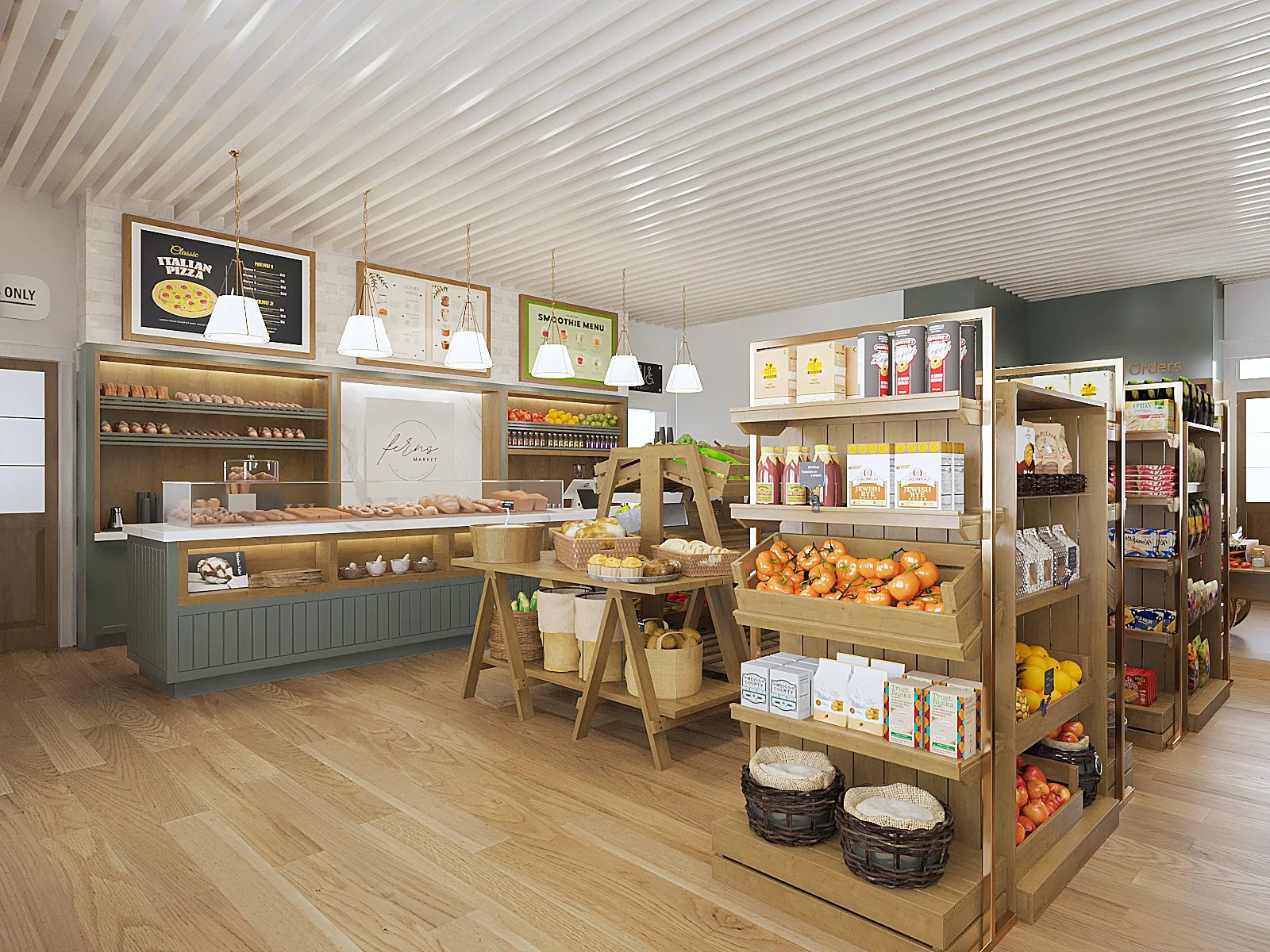
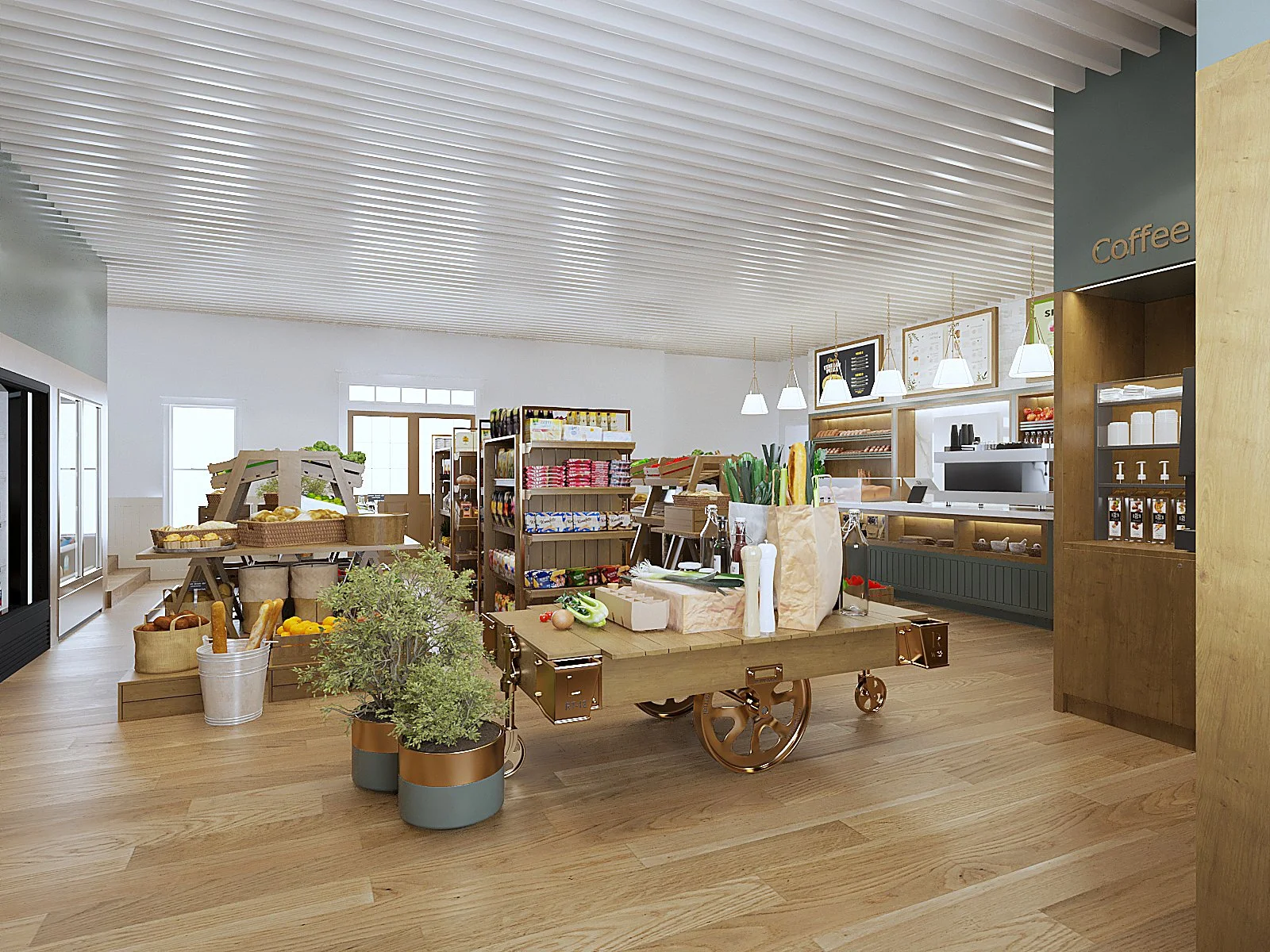
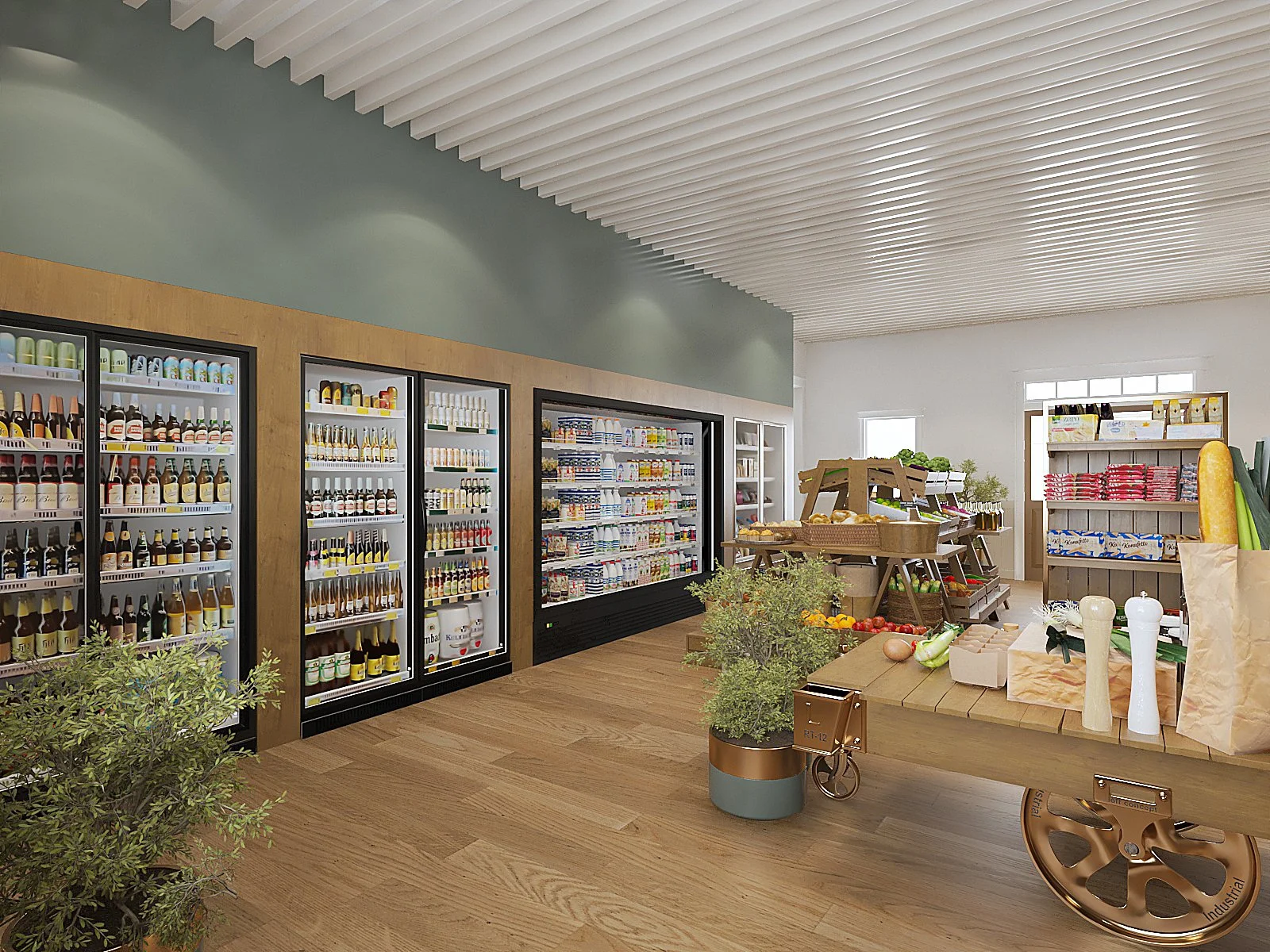
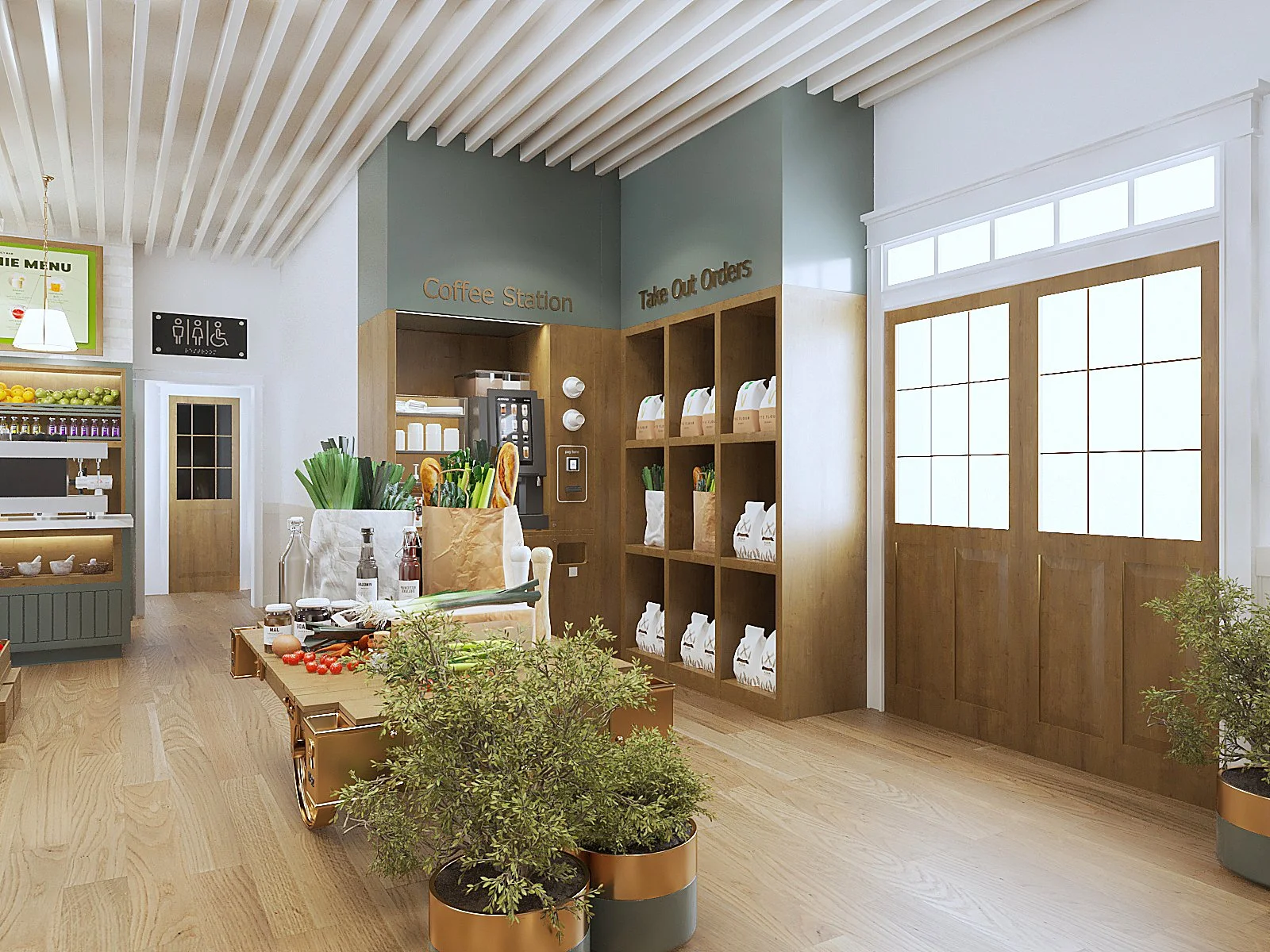
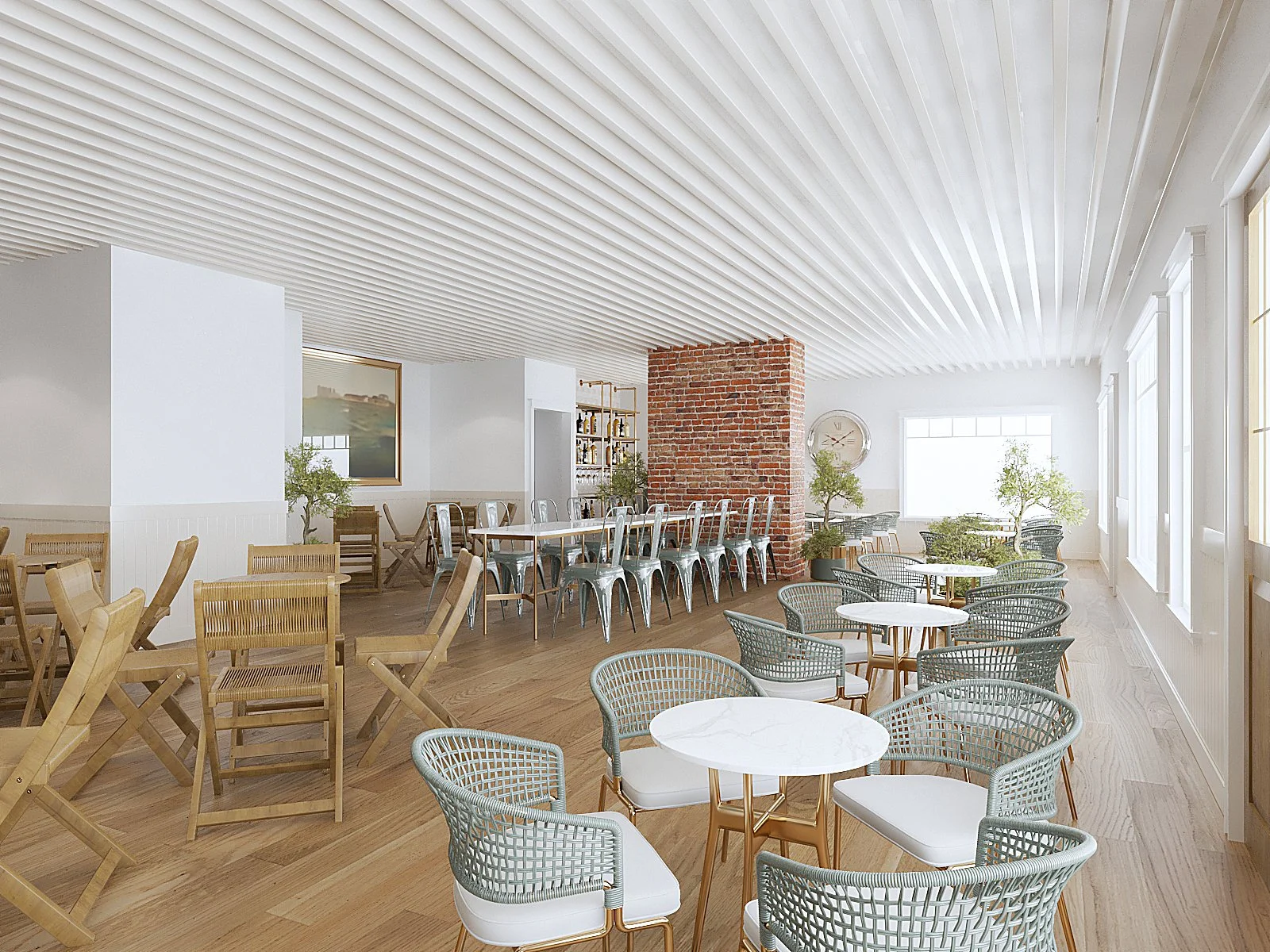
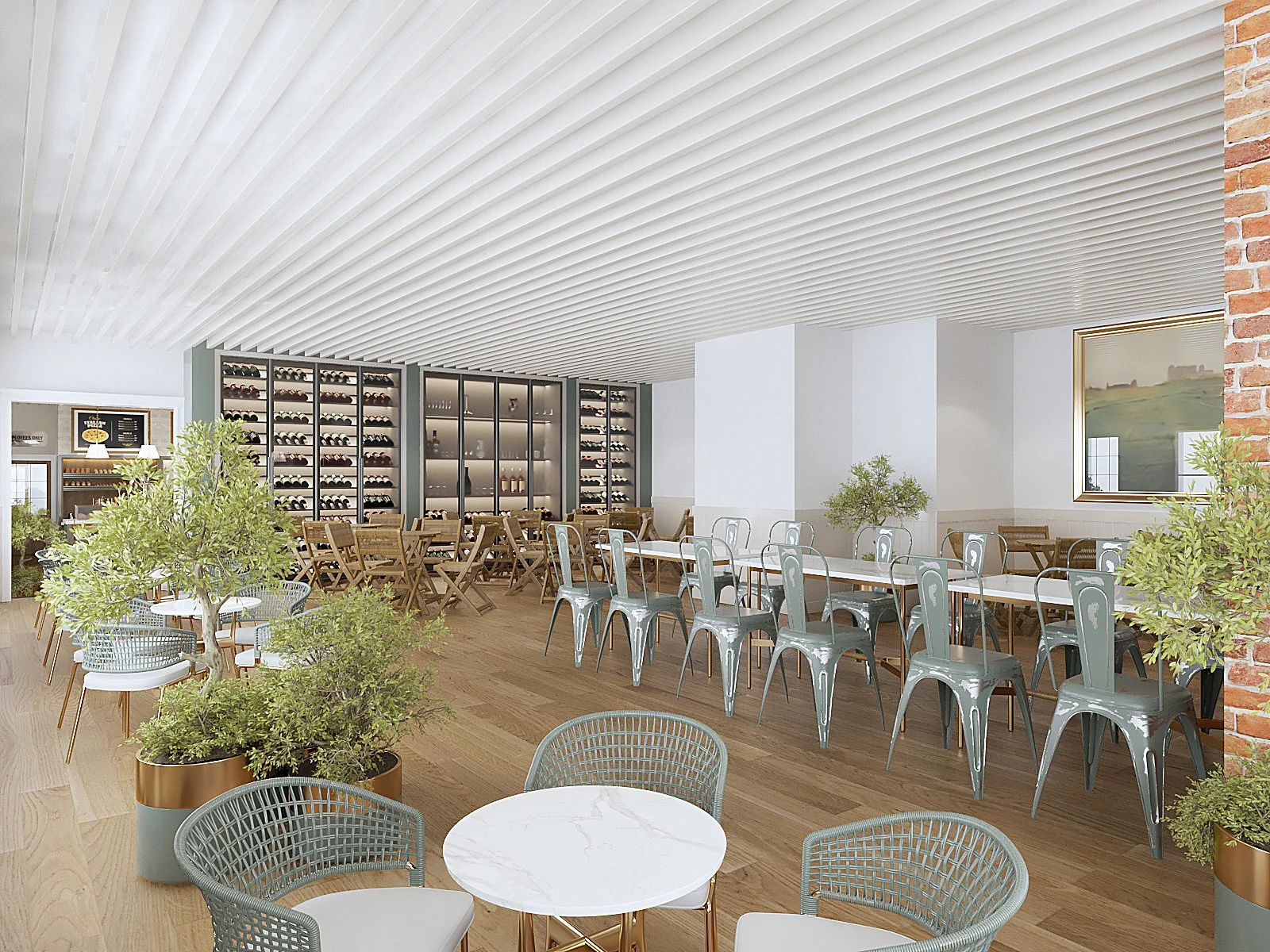
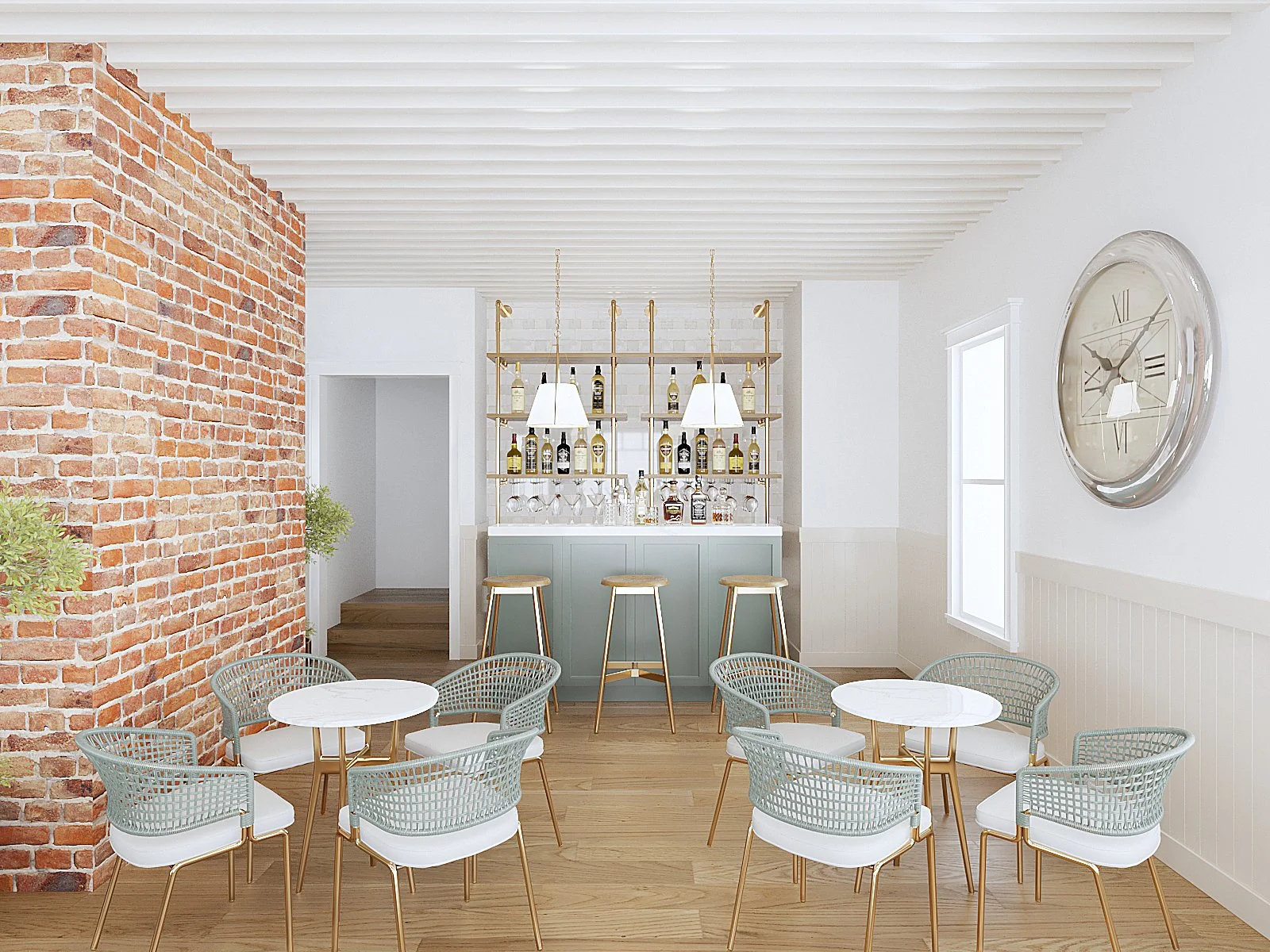
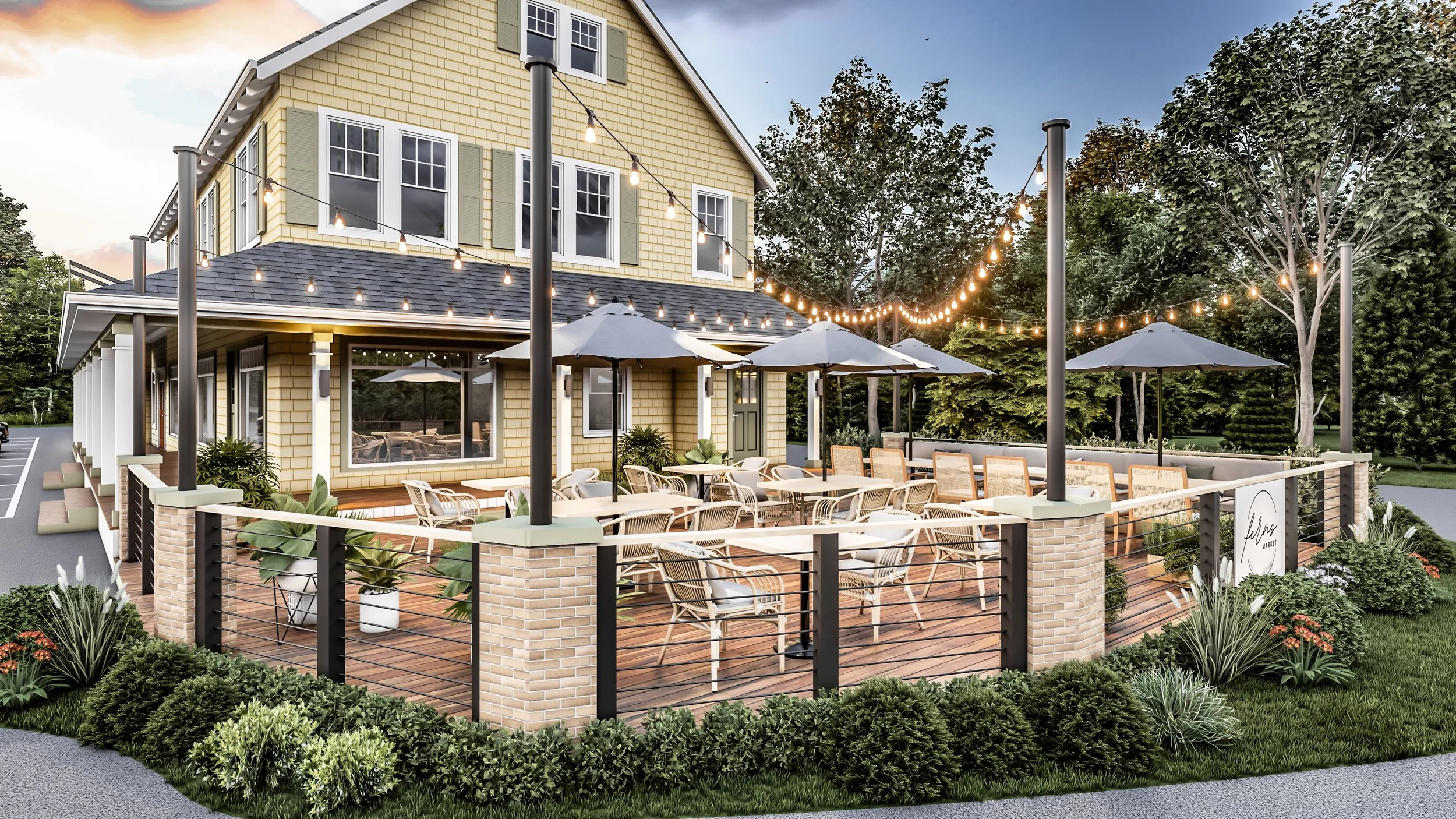
Design preview
Historic character, reimagined for everyday life.
Early concepts inspired by community feedback: a light-filled market and café, room to gather, and a renewed patio at the center of town. Scroll to explore.
Weston & Sampson has confirmed sufficient treatment capacity for the proposed connection. Engineers are now advancing potential routes for a shared wastewater main into Carlisle Center, along with the scope and cost of the next phase. Ferns privately funded this feasibility work.
*No wastewater connection or construction project has been approved. Routing, cost, permitting, operating requirements, and Town approval remain subject to detailed engineering and public review.
Completed
Environmental testing
Soil, groundwater, and indoor air have been sampled through multiple rounds of testing to understand the property's historic petroleum impacts. The overall results have been very encouraging.
Additional monitoring wells are being installed to continue that work.
Conclusion reached
On-site options
Engineers spent months evaluating conventional septic, advanced treatment, neighboring land, and other alternatives. Four firms reached the same conclusion: the site's physical and regulatory constraints leave no approvable on-site solution.
A viable long-term wastewater plan is necessary to move forward with our proposed market and café.
Capacity confirmed
The school connection
The feasibility study confirms sufficient treatment capacity. Engineering is now focused on potential routes, infrastructure needs, permitting, operating requirements, and preliminary costs for a connection to the Town's facility.
Capacity is confirmed; the route and project still require Town and regulatory approval.
Why study the school connection?
A promising option, with important questions still to answer.
The school facility has served the campus since 2006 and was originally designed with additional capacity. Weston & Sampson—the firm that designed and currently services the system—has confirmed sufficient treatment capacity for the proposed Ferns connection. Its work now turns to the route, pumping, permitting, cost, and operating details needed to move the project forward responsibly.
The current work is focused on bringing a shared wastewater main into Carlisle Center. Carlisle explored a similar Town Center concept more than a decade ago; today's work revisits that idea using current conditions and updated engineering.
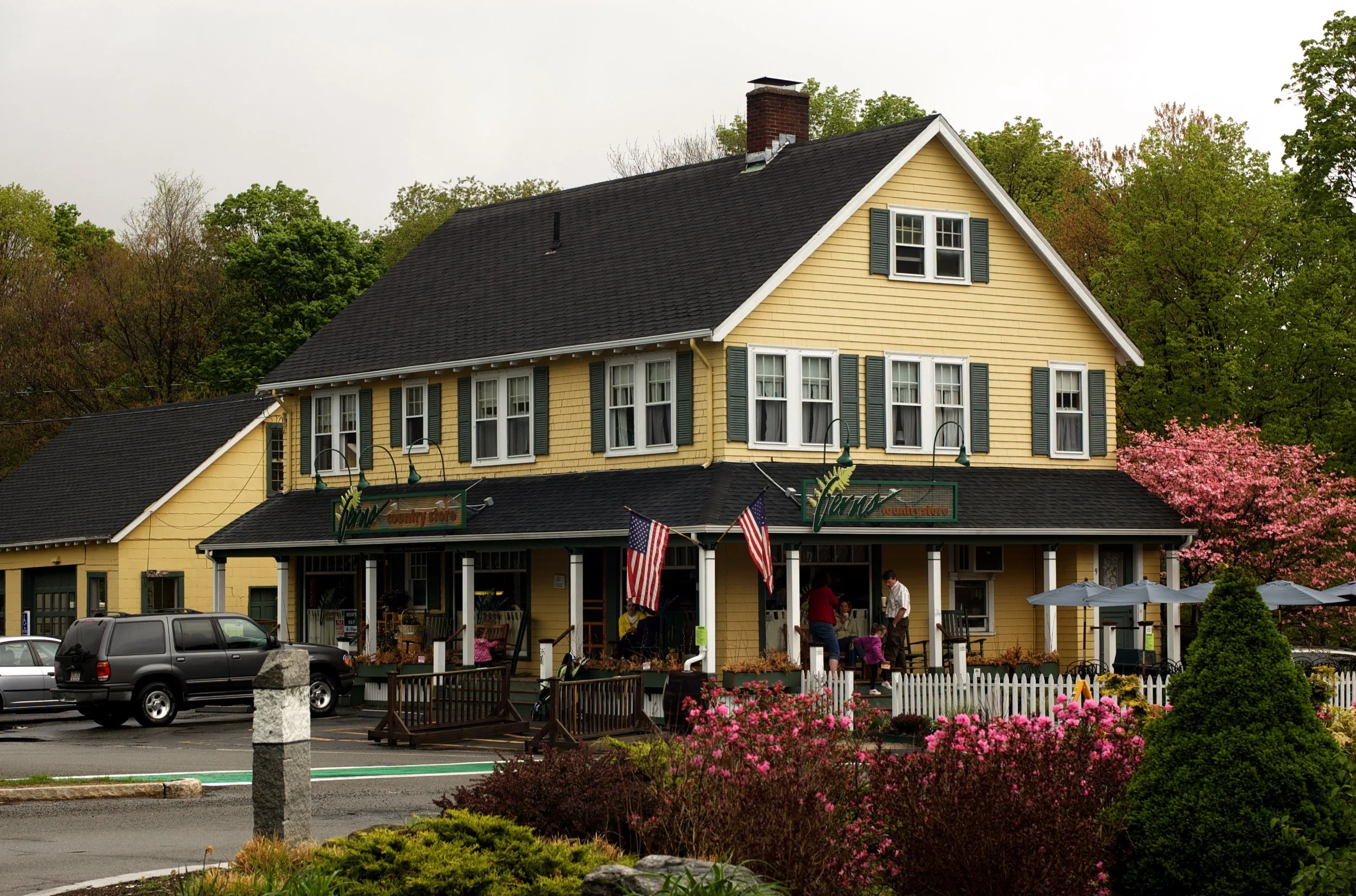
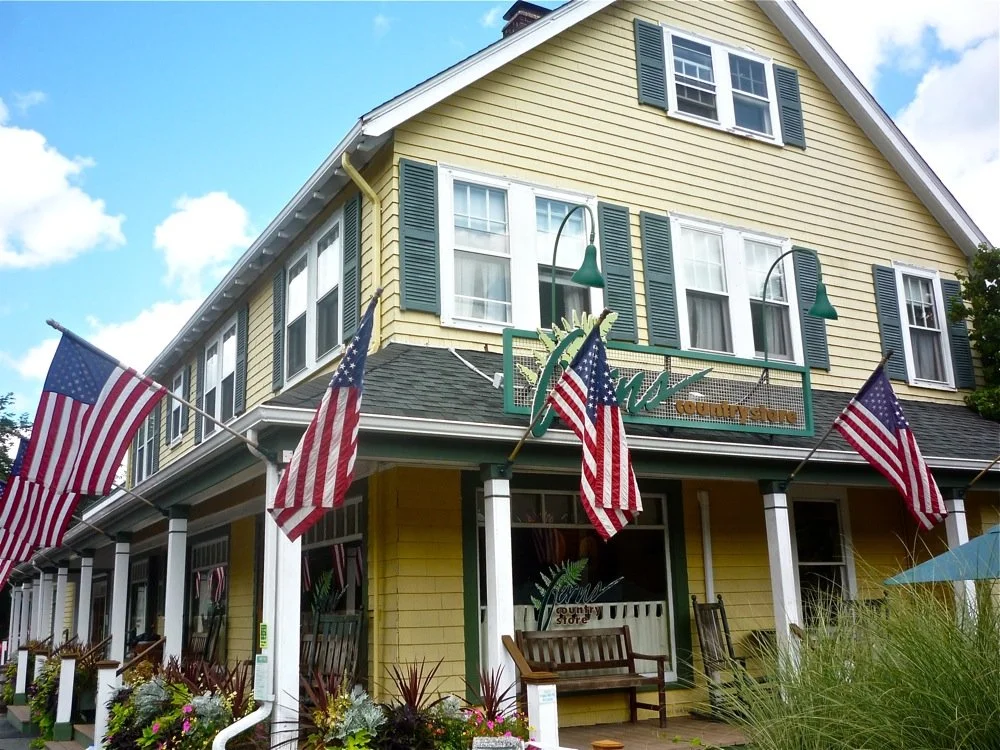
This corner has been a superette, gas station, post office, general store, and gathering place.
Over the years, Ferns became part of Carlisle's daily rhythm: kids choosing candy after school, cyclists refueling, neighbors catching up over coffee. The store closed in May 2025, ending one era and beginning the work of the next.
“Not just a stop for essentials—a place where everyday life happened.”
Carlisle Center wastewater solution · November 2026
Article 6 FAQs
01What did Article 6 authorize?+
Article 6 funds the design and permitting phase of the Carlisle Center wastewater solution. It does not authorize construction.
This phase—estimated at $225,000 to $300,000—would provide the engineering, route analysis, permit applications, and bid-ready information needed before the Town considers construction. Construction would require a separate Town Meeting vote, expected in 2027.
02Does this proposal expand the wastewater treatment facility?+
No. Article 6 does not authorize a larger treatment plant or an increase in its permitted capacity.
It funds engineering and design for a shared collection line from Carlisle Center to the existing Banta-Davis facility. The work will also confirm available capacity and identify any related improvements needed to accept new connections. Extending a collection line is different from expanding the treatment facility itself.
03Is the needs assessment only about Ferns?+
No. Phase I evaluated possible connections from Ferns and the Gleason Public Library while considering future public-facility connections within the Town Center.
The broader assessment will examine the wastewater needs of Village Court housing, Town Hall, the Police and Fire stations, other public buildings, and private properties in Carlisle Center.
Any additional connection would depend on available capacity, engineering, regulatory approval, Town review, and agreed costs and operating terms.
04What happens before the construction vote?+
The approved Article 6 funding pays for the work needed to answer the remaining questions before the Town considers construction.
The feasibility study has already found sufficient treatment capacity for the proposed Ferns and Library connections and identified a low-pressure collection line as the most feasible approach. Article 6 will establish the final route, site conditions, design, permits, construction and operating costs, grant opportunities, and connection requirements.
It does not authorize construction. Voters will receive the results of this work before a separate construction funding vote.
05Why is this marketed as ‘Save Ferns’ when it really seems to be about Carlisle Center?+
We use “Save Ferns” because Ferns is recognizable. It’s a place people love, remember, and want back. But this effort has become about something much bigger than reopening one business.
Ferns has been the catalyst for solving this longstanding issue, but Carlisle Center is why it matters.
06Is the Town paying to reopen or renovate Ferns?+
No. Ferns is privately responsible for the cost of connecting to the proposed shared main, its building, business operations, and all work on the Ferns property. Ferns also privately funded the initial feasibility study that brought this opportunity before the Town. We have already invested more than $100,000 in private due diligence.
The Town proposal concerns shared public infrastructure: the wastewater main, public engineering, and permitting.
07Is this a private sewer being built just for Ferns?+
No. The proposal is for shared infrastructure in Carlisle Center, not a privately owned pipe for Ferns.
The initial concept includes Ferns and the Gleason Public Library. It could also allow other Center buildings and homes to connect in the future, subject to available capacity, technical review, and Town authorization.
08Why should the Town consider infrastructure that helps a private business?+
The question before the Town is broader than one business. It concerns public infrastructure, the Library, groundwater protection, and the long-term vitality of Carlisle Center.
The 1995 Town Plan called for opportunities for “informal gatherings, casual meeting places, accidental encounters” in the Center. Ferns is one part of that larger community goal.
09What are the decision points before construction?+
The proposed sequence is:
Feasibility: Confirm capacity and identify a workable connection approach. This privately funded phase has been completed.
Design and engineering: Complete surveys, subsurface and environmental investigations, flow analysis, route design, pumping design, and plans for the shared main and Library connection.
Permitting: Submit the required MassDEP application and obtain applicable state and local approvals.
Costs, grants, and operating terms: Prepare construction and operating estimates, pursue up to two grant applications, and establish proposed rules for capacity, connections, fees, maintenance, and ownership.
Separate construction vote: Return to Town Meeting with the design, permits, refined costs, funding options, and proposed connection terms.
Bidding and construction: Only if construction funding is separately approved would the project proceed to bid, award, and construction.
10Would this create a townwide sewer system or allow unlimited development in the Center?+
No. The current proposal is limited to a shared wastewater connection in Carlisle Center. It does not authorize a townwide sewer system.
The wastewater treatment facility has a fixed capacity. Large-scale development would require a much larger treatment facility, an expanded leaching field, additional engineering and permits, and further public approval.
Any future connection or expansion of the facility would require its own technical review, public process, and Town authorization.
11How did Ferns operate with its existing septic system?+
Ferns has operated under a special septic variance since 1996, amended in 2010 to address its location within Zone I, a public drinking-water well protection area.
The property’s approved design flow was 970 gallons per day, including the upstairs apartment. Its soil absorption system was designed for only 211 gallons per day—21.7% of that flow.
The variance allowed this arrangement with restrictions on food preparation, a composting toilet, closely monitored water use, and an emergency overflow tight tank.
12Why can't Ferns reopen using its existing septic system?+
The existing approval is approximately 970 gallons per day for the entire property, including the apartment. Under Massachusetts wastewater regulations, a food establishment with seating is subject to a minimum design flow of 1,000 gallons per day before accounting for the apartment and other uses. Ferns' intended whole-building design flow is roughly 2,000 gallons per day.
Ferns sits on a small parcel within a Zone I wellhead protection area. MassDEP policy says septic systems should be removed from Zone I whenever possible, and design flow may not be increased there. The rest of Carlisle Center is in Zone II, where nitrogen-loading rules limit new or expanded septic design flow to 440 gallons per day per acre.
Four engineering teams evaluated conventional septic, advanced treatment, relocating the well, Center Park, and neighboring land. None found enough compliant land for the wastewater capacity a market and café requires. This is not an equipment-repair problem: the required capacity cannot be created on the Ferns parcel or on neighboring property, which is why the shared connection emerged as the only viable long-term solution.
13Could a smaller septic system solve the problem?+
Even one customer seat triggers a minimum design flow of 1,000 gallons per day, before adding the upstairs apartment. Ferns’ existing approval is for 970 gallons per day for the entire property.
Because the septic system is within Zone I, MassDEP’s policy prohibits increasing its design flow and calls for removing existing systems from that protected area whenever feasible.
Even a system that physically fits would still face those drinking-water protections.
14What other issues does Ferns have?+
Ferns also has several known site and drinking-water issues:
A previous fuel release left contaminated soil and groundwater that require continued monitoring and remediation.
The well has had PFAS detections above state guidelines, along with past coliform and E. coli detections.
The existing well has limited yield and can run dry during use.
Permanent disinfection upgrades approved for prior operators were never completed.
We are planning to drill a deeper well and install robust water treatment and disinfection. Environmental professionals will continue the soil and groundwater work. Each of these issues has an on-site engineering or remediation path.
Wastewater is the only major issue that cannot be solved on the Ferns property or on neighboring land.
15Is this all happening because you want a full-service restaurant?+
No. Whether the concept is Ferns as it was, a Dunkin', or a full-service restaurant, once a food establishment includes seating, the same 1,000-gallon-per-day minimum applies regardless of whether it has one seat or many.
Our vision is a market and café with counter service and seating, similar to how Ferns operated before, with a more expansive menu.
This is not a requirement created by choosing a particular business model. It is a regulatory threshold that any seated food establishment on the property would have to meet.
16What does Title 5 mean by “restaurant” or “fast food” for a café like Ferns?+
Title 5 (310 CMR 15.203) lists a wastewater design rate of 35 gallons per day per seat for “Restaurant” and 20 gallons per day per seat for “Restaurant, Fast Food.” As a MassDEP engineer explained in a Martha's Vineyard Commission review, the fast-food rate assumes all customer plates, cups, and utensils are disposable. The distinction is about what needs to be washed, regardless of where customers order or how staff serve the food.
We plan to offer counter service at Ferns and hope to use real plates and silverware. Either way, the minimum wastewater design flow is 1,000 gallons per day (GPD) for the café with seating, before accounting for the upstairs apartment.
17Is there enough parking for the proposed seating?+
Parking has been part of the planning from the beginning. The 49-seat scenario in the feasibility study was developed with available parking in mind. The final seating count and layout will meet Carlisle’s parking and permitting requirements, including spaces for market customers and employees.
18Could Ferns just reopen as a smaller market without a café?+
A takeout-only market with no seating could follow a different regulatory path. But that would be a different concept from what Carlisle residents told us they wanted in our community survey. Almost 600 people responded: 86 percent wanted a casual meeting place, 85 percent wanted counter service, and 76 percent wanted café seating.
Our vision is a market and café with counter service and seating. Once a food establishment includes even one seat, the 1,000-gallon-per-day minimum applies before accounting for the apartment and other uses. Reducing the menu or the number of seats would not change that minimum.
19Could Ferns reopen exactly as it was?+
We cannot assume the prior variance would transfer to a new operation or be reissued under today’s circumstances. Any reopening plan requires current approvals.
The previous operation relied on decades-old variances, significant restrictions on food preparation, a composting toilet, limited seating, and closely monitored water use. Its wastewater system is substantially undersized for the building’s food-service use.
Those constraints also made running the business more difficult. Bringing Ferns back means giving it a realistic chance to succeed, with a wastewater solution that supports its role as a country market and gathering place for years to come.
20Were other wastewater options seriously considered?+
Yes. Four engineering teams evaluated conventional septic, advanced treatment systems, neighboring land, Center Park, tight tanks, composting toilets, restroom trailers, relocating the water supply, and substantially restricted operations.
None produced an approvable on-site solution.
21Why couldn’t you put a septic system at Center Park?+
We investigated Center Park with the Town’s permission, hoping to fund a solution privately.
But the approximately 0.6-acre parcel falls within Zone II wellhead protections. Under the standard nitrogen-loading limit of 440 gallons per day per acre, that allows about 264 gallons per day—well below the 1,000-GPD minimum for a food establishment with seating.
In early May, Innovative Septic Designs delivered what we call our “brick-wall phone call,” explaining that neither property offered an approvable solution. Although that conversation wasn’t documented in a formal report, further engineering reviews and discussions with MassDEP followed.
22Why not just use a holding tank?+
MassDEP determined that a holding tank is not a long-term solution, but indicated that it is willing to evaluate a limited interim holding-tank plan once the Town makes a firm, enforceable commitment to the permanent connection. That could allow Ferns to reopen while the permanent connection is designed and built.
23Has MassDEP prevented Ferns from reopening?+
Not really. The wastewater limitations are longstanding, and MassDEP's responsibility is to determine whether a proposal protects public health and complies with state requirements.
MassDEP has been working collaboratively with the project team to explain the permitting path and evaluate potential interim and permanent solutions.
24Why are you studying a connection to the existing WWTF at Banta Davis?+
After months of evaluating on-site options, four engineering teams concluded that a connection to the Carlisle School wastewater treatment facility is the only viable remaining long-term path.
The facility is permitted for approximately 13,500 gallons per day and has enough capacity to continue studying the proposed connection while protecting the school's present and future needs.
25Does the school wastewater facility have enough capacity?+
The November 5 study uses the facility’s permitted capacity of 13,500 gallons per day, a school planning flow of 5,032 GPD, Ferns’ maximum design flow of 2,035 GPD, and the Library’s design flow of 224 GPD. Together, those flows total 7,291 GPD, leaving 6,209 GPD below the permitted capacity.
The feasibility study indicates that there is sufficient permitted capacity to continue pursuing the proposed connections. A possible additional 1,000 GPD for future school growth would come from that remainder, leaving 5,209 GPD. Final capacity and connection approvals remain subject to MassDEP review during design and permitting.
26Has MassDEP reviewed the feasibility findings?+
Yes. MassDEP has reviewed preliminary feasibility work and provided technical comments, including guidance on design flows and calculating treatment capacity. Further engineering, review, and regulatory approvals are still required.
27I heard a wastewater treatment plant lasts only 20 years, and Carlisle's plant is already more than 20 years old. Is that true?+
No. A plant being more than 20 years old does not mean the entire facility needs to be rebuilt.
Wastewater plants are modular. Their tanks, pumps, rotating biological contactors, controls, and other parts have different service lives and can be maintained or replaced individually as needed. The Town's 2023 15-Year Plan reflects this, with different replacement schedules for different components rather than one expiration date for the whole facility.
The facility's actual condition, maintenance history, and component renewal matter more than its age alone. Weston & Sampson's October feasibility study found the proposed connection preliminarily feasible.
28Has the plant been so underutilized that it was fed dog food?+
Yes, according to the former Board of Health chair, who was quoted in The Carlisle Mosquito describing the practice.
Wastewater treatment depends on microorganisms that need a consistent supply of organic material. When flows are very low, operators may need to supplement that food source. Additional, consistent flow can benefit an underutilized facility.
29How much are we paying for a WWTF facility that the town only uses a fraction of?+
The Town’s 15-year plan projects nearly $1.4 million between 2026 and 2033 to operate, maintain, and fund equipment replacement at the Banta Davis wastewater treatment facility.
Meanwhile, the November 2026 feasibility study reports average flow equal to approximately 18% of its permitted capacity.
Taxpayers are supporting the ongoing costs of an entire treatment facility while using less than one-fifth of its permitted capacity on average. Its existing maintenance and replacement needs remain whether Ferns connects or not.
A shared connection offers an opportunity to get more value from infrastructure we already pay for. Added operating costs would be evaluated during design, and Ferns would pay user charges and contribute its fair share toward shared infrastructure and maintenance.
30What will it cost to process the additional wastewater at the existing plant?+
The exact added cost will be determined during design, but Carlisle's records consistently show that additional regular flow could help the underutilized plant operate more efficiently:
The 2011 Annual Town Report said additional connections could “improve the functioning of the school's waste water treatment plant.”
The 2015 Housing Production Plan reported that “it actually costs them extra to operate the treatment plant with insufficient volumes of wastewater.”
The 2020–2021 Open Space Plan said, “The plant would benefit from regular daily flows.”
The 2022 Master Plan noted that “the system already exists and is underutilized.”
Carlisle already pays to operate and maintain the facility, and many of those fixed costs do not go away when it is underutilized. Adding regular flow can improve the value the Town receives from an asset it already owns, while Ferns would pay the agreed charges for its use of the system.
31Would Ferns take wastewater capacity away from the school?+
Protecting the school's current and future needs comes first. The design and permitting phase would establish operating requirements and capacity safeguards before any construction proposal returns to voters.
32Has a route already been selected?+
No final route has been approved. The feasibility work identified possible approaches, but detailed engineering and permitting are needed before the Town can select and accurately price a final route.
33Is the project definitely going to cost $1.4 million?+
No. The current total planning range is approximately $685,000 to $1.4 million, including design, permitting, and construction. The upper figure has been described as an absolute worst-case planning scenario, not a settled project cost.
Completing the design phase is how the Town would replace that broad estimate with reliable construction pricing.
34Will grants pay for the project?+
The Town and project team are pursuing several possible sources of outside funding:
The Massachusetts Rural Development Fund offers competitive grants generally ranging from $50,000 to $500,000 for eligible rural infrastructure projects.
The MassWorks Infrastructure Program provides competitive public-infrastructure grants to municipalities and other eligible public entities.
The USDA Water and Waste Disposal Program provides long-term, low-interest financing and, when funds and eligibility allow, grants combined with loans for rural wastewater infrastructure.
The Clean Water State Revolving Fund provides affordable public financing for eligible wastewater planning and construction.
Legislative earmarks, state bond funding, and other programs may also be explored. No award is guaranteed. The engineering scope includes assistance with up to two grant applications.
A completed design and permit-ready project would make Carlisle more competitive for funding. Voters would see the available funding and updated costs before being asked to authorize construction.
35What caused the Library’s 2026 nitrate warning?+
A July 2026 engineering evaluation identified “nitrate dumping” from the Library’s PFAS treatment media. The media had collected nitrate from the well water and then released it at higher concentrations, causing treated water to exceed the drinking-water limit while untreated water remained below it.
The engineers recommended changing the PFAS treatment media to address this problem.
The well also has a longer history of elevated nitrate. The report identifies septic systems and fertilizers as possible sources, but does not establish the cause or show that a wastewater connection would resolve the Library’s drinking-water issues.
36If the Library passed its Title 5 inspection, why consider a wastewater connection?+
Passing a Title 5 inspection means the system did not meet the inspection’s failure criteria. It does not certify that the system removes nitrogen or has no effect on groundwater.
A shared wastewater connection would move the Library’s wastewater disposal off site. Its potential benefits should be evaluated through the engineering and permitting process.
37If nearby towns also rely heavily on septic systems, why is wastewater such an issue in Carlisle?+
Recent Mosquito coverage compared Carlisle with Westford, Concord, Sudbury, Wayland, and Groton, but left out an important difference: each of those communities has a public water system. Carlisle has no public water distribution system and relies on private drinking-water wells.
Septic systems are not inherently unsafe. The concern is the combination of wastewater disposal and nearby drinking-water wells in the same groundwater environment—especially when wells and septic systems are close together, as they are in the Center. That is why wastewater treatment and groundwater protection are such important local issues.
38Is wastewater a new concern in Carlisle Center?+
No. Carlisle has been discussing wastewater and water quality in the Center for decades.
The 1995 Town Plan stated that “disposal of waste water necessarily impacts upon the quality of groundwater.” Wastewater proposals were also considered in 2008 and 2010. The present proposal is the latest attempt to address a longstanding infrastructure problem.
39When did the Town first pursue extending the wastewater line to the Center?+
The Town first explored extending wastewater service from the school facility toward Carlisle Center in 2008 and returned to the proposal again in 2010.
The current proposal builds on an idea that has been part of Carlisle's public record for many years. It uses updated engineering, current operating information, and today's regulatory requirements.
40Is the Harvard General Store project proof that this will work here?+
Harvard provides a useful Massachusetts precedent. Town-owned wastewater infrastructure connected its village center to an existing school facility and helped enable the Harvard General Store's café.
It demonstrates that a similar approach can work in a Massachusetts town, although Carlisle must still complete its own engineering, permitting, and public approval process.
41When did you first present this proposal to the Town?+
Initial conversations with Town officials began in March 2026 to discuss using Center Park or the police station’s septic system.
Once those options were ruled out, we proposed a connection to the existing wastewater treatment facility at the Board of Health’s May 27 meeting, where we were told “this would never happen in our lifetime.”
The discussion was tabled until we pursued our own feasibility study in July. We then formally presented the proposal to the Select Board on August 11, 2026.
42Can Ferns reopen before the permanent connection is constructed?+
There is a potential path for Ferns to reopen before construction of the permanent connection is complete.
MassDEP has indicated that it is willing to evaluate an interim wastewater approach once there is a firm, enforceable Town commitment to the permanent solution. This could allow restoration and reopening work at Ferns to move forward while the permanent connection is being designed and constructed.
The specific interim operating plan would still require regulatory and Town review, but a possible path has been identified.
43How strongly did Carlisle support Article 6?+
Carlisle approved Article 6 with at least 85% of the vote at a Special Town Meeting with record attendance.
Before Town Meeting, the Council on Aging and Human Services Board, Gleason Public Library Trustees, Planning Board, Conservation Commission, and School Committee voted unanimously in support. The Finance Committee voted 5–2 in favor, and a majority of the Select Board also supported the article. The Board of Health voted not to recommend it.
44Were you behind the Boston Globe article?+
We did not solicit the article. A Boston Globe reporter who had been following our newsletters replied to our August 21 update. We expected the story to focus more on the challenges facing Ferns, including the building’s history, the fuel leak, and the environmental cleanup. We participated in the interview, but the article’s framing and conclusions were the Globe’s own.
45If the challenges are so significant, why are you still pursuing Ferns?+
Because we believe the community deserves to have Ferns reopened. If this were simply a financial decision, we would not still be here.
We have invested significant time and resources in engineering, environmental investigation, and planning because we believe Ferns is an important part of Carlisle. We feel a responsibility to explore every realistic path before giving up.
The environmental investigation has also been encouraging. Groundwater petroleum concentrations have generally declined over time, indoor-air testing found no solvents or degreasers, and the detected compounds were well below applicable health-based thresholds. While additional work remains, those results give us confidence that the property's environmental challenges can be responsibly addressed.
As long as there is a potential path forward, we believe it is worth continuing to pursue the opportunity to restore Ferns for future generations.
46What happens if Ferns fails as a business?+
No business can guarantee its future. Our goal is to give Ferns a realistic chance to succeed by resolving the wastewater restrictions, food-preparation limits, and compliance burdens that constrained the previous operation.
Residents have expressed a strong desire for a place to pick up essentials, grab coffee, and sit with a friend. That is the role we hope to restore.
Regardless of who operates Ferns, shared public infrastructure would remain a Town asset that could serve other eligible Center properties, subject to capacity, approvals, and connection terms.
47Could Ferns become something else?+
Yes. Carlisle Center’s zoning allows other uses, and a future owner could pursue a different use with lower wastewater needs.
We don’t want that to happen. That’s why we’re doing everything we can to bring back the Ferns people remember.
48Have you purchased Ferns?+
Not yet. We have a signed purchase option, but the purchase depends on Carlisle approving construction of the wastewater connection. After the Article 6 result, we are moving ahead with interior architectural drawings and beginning the store permitting process so we can move quickly if voters approve construction.
49When will Ferns reopen?+
There is no confirmed reopening date, but if the remaining steps line up, we would love to open by fall 2027.
Voters must first approve construction, hopefully in spring 2027. Once the Town commits to construction and sets a schedule, MassDEP has said it would consider allowing Ferns to reopen with a temporary holding tank while the permanent connection is built.
Engineering, permits, the construction vote, the property purchase, and the remaining environmental work still need to align before a reliable opening date can be announced.
50What happened at the November 16 Town Meeting?+
Carlisle approved Article 6 with at least 85% of the vote at a Special Town Meeting with record attendance. The vote funds engineering, design, and permitting for a connection from Carlisle Center to the Town’s existing wastewater treatment facility.
Construction was not authorized. Voters will decide separately whether to fund construction after the design work provides a route, cost, permits, and operating plan—hopefully in spring 2027.
We are deeply grateful to every neighbor who showed up, stayed through the final article, asked questions, and voted.
51When can we talk about sandwiches and coffee instead of...well...poop?+
Hopefully soon. We know the community is eager to get back to talking about coffee, sandwiches, and seeing neighbors again. We are too.
The wastewater work is not the destination—it is what could make a lasting community gathering place possible.
52How can I help?+
Support from Carlisle residents truly makes a difference.
Stay engaged as the Town completes design and prepares for the separate construction vote. Share accurate information, follow project updates, and keep reminding Town leaders why a vibrant Carlisle Center matters.
Your extraordinary turnout and support made the design phase possible. The next milestone is turning that mandate into a responsible, buildable proposal.
Thank you for your support and encouragement throughout this process. Please feel free to reach out with any additional questions.
The future of Ferns
Come along for the next chapter.
Get progress notes, milestones, and the first word on what's happening at Ferns.